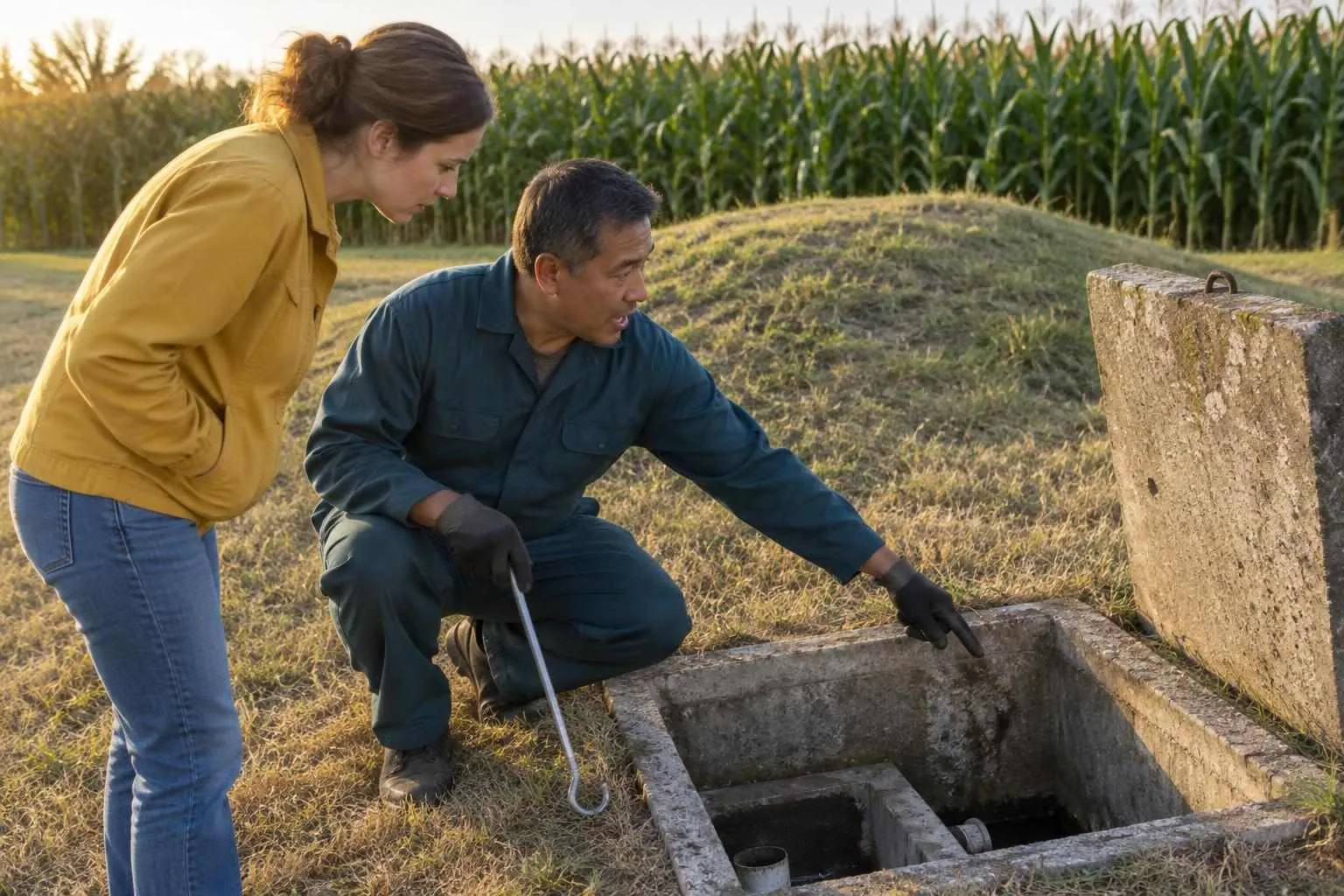
Get free quotes from septic inspection near you
Takes about a minute. Free, no obligation; providers reply to you directly.
My neighbor sold his house in 2023 and the deal almost fell apart on day four — not because of the foundation, not because of the roof, but because the septic inspector his buyer hired was a one-man operation who booked two jobs the same morning and showed up two hours late to neither. The buyer’s agent had used this guy a dozen times before. Cheap, available, “always does a good job.” Until he didn’t.
That story isn’t an anomaly. It’s a preview of the real decision you face when you need a septic inspection: do you hire the independent operator who’s been doing this for 20 years and charges less, or do you go with an agency firm that has a receptionist, a fleet of trucks, and a liability policy you can actually read?
Here’s the honest answer, based on how this actually plays out.
The Short Version:For routine inspections on a standard residential system, a qualified independent inspector is often the better value. For real estate transactions, commercial properties, new installations, or anything where multiple specialists need to coordinate, an agency earns its overhead. The key word in both cases is qualified — the license matters more than the business model.
Key Takeaways
- Routine preventative maintenance every 3–5 years reduces system failures by up to 80% — the question is who you trust to do it
- Most septic projects touch 3 separate specialists (evaluator, designer, installer); agencies can consolidate that; freelancers usually can’t
- Licensing and insurance are non-negotiable regardless of who you hire — state law in most jurisdictions requires it
- Real estate inspections carry liability that makes the cheap option expensive when something goes wrong
The Case for the Independent Inspector
I’ll be honest: most homeowners don’t need a multi-truck operation to pump their tank and check their baffles. What they need is a licensed, insured professional who knows what overloaded drain fields look like from 20 feet away and won’t miss a clogged effluent filter because they’re rushing to their next appointment.
Independent inspectors often have that. Many of them spent a decade at an agency before going solo. They carry lower overhead, pass some of that to you, and because their reputation is entirely personal, they’re often more motivated to do thorough work. You’re not a file number — you’re a referral source.
Where independents shine:
- Routine O&M inspections on systems you already know well
- Rural properties where agency coverage is thin
- Budget-conscious situations where you need the inspection but don’t need a full-service package
- Long-term relationships — finding one licensed inspector you trust and using them every 3–5 years is genuinely the smart play
Reality Check:“Independent” doesn’t mean “unaccountable.” It means unverified until you check. Washington State requires certified O&M inspectors for properties on septic. Texas requires TCEQ-licensed evaluators for site assessment. Whatever state you’re in, your freelance inspector needs to meet the same licensing bar as any agency employee. If they can’t show you a current license and proof of insurance, walk away — business model doesn’t matter.
The Case for the Agency
The moment a septic inspection touches a real estate transaction, a commercial building, a new installation, or a system that might need repair, the calculus shifts.
Here’s why: most septic projects involve at least three specialists — a site evaluator, a designer, and an installer. An independent inspector typically covers one of those roles, maybe two. An agency can cover all three under one contract, one liability policy, and one phone number when something goes wrong.
That consolidation matters more than it sounds. InterNACHI forum experts have explicitly flagged subcontracting septic inspections as a liability trap — in Florida, for instance, a GC license is required to coordinate that work. When you hire an agency, you’re buying accountability at scale.
Agencies also tend to have:
- Consistent equipment (electronic locating, camera inspection, proper PPE)
- Staff redundancy — if your inspector gets sick, someone else shows up
- Institutional knowledge on local compliance requirements
- The ability to handle HOA inspections and real estate closings with documentation that satisfies attorneys
Pro Tip:If you’re a real estate agent commissioning inspections regularly, an agency relationship protects you. A missed failed baffle on a freelance inspection that you recommended can become your problem. An agency with E&O coverage and a paper trail is your shield.
Side-by-Side: How They Stack Up
| Factor | Independent Inspector | Agency Firm |
|---|---|---|
| Cost | Generally lower | Higher (overhead built in) |
| Scheduling flexibility | High — direct line to the person doing the work | Variable — may require coordination |
| Scope of services | Inspection + pumping; rarely design or install | Full-service: eval, design, install, repair |
| Accountability | Depends entirely on the individual | Single point of contact for complex projects |
| Licensing/insurance | Must verify individually | Typically easier to audit; firm holds policies |
| Consistency | Variable if they’re stretched thin | More predictable across jobs |
| Best for | Routine maintenance, known systems | Real estate, new installs, multi-phase projects |
| Risk profile | Higher if unlicensed/underinsured | Lower for complex or high-stakes work |
What the Research Actually Shows
The 80% failure reduction from routine 3–5 year maintenance isn’t an agency talking point — it’s what happens when licensed professionals catch the clogs, leaks, and overloaded drain fields before they become $15,000 drainfield replacements. That outcome doesn’t care whether the inspector drives a personal pickup or a branded fleet truck.
What it does care about: showing up, knowing what to look for, and having the equipment to find what you can’t see. An independent inspector who does 200 inspections a year in your county probably knows your soil conditions better than an agency tech who covers three states.
Nobody tells you this, but local specialization often beats firm size. The Pierce County, WA requirement for certified O&M inspectors isn’t satisfied by credentials from another state — it’s satisfied by knowing Pierce County’s rules. That knowledge lives in people, not business entities.
When the Decision Is Actually Easy
Hire an independent inspector when:
- You need a routine inspection on your own home
- You have an established relationship with a licensed pro
- You’re in a rural area where agency coverage is limited
- You want direct communication without going through a dispatch system
Hire an agency when:
- You’re buying or selling a property and the inspection will be part of closing documents
- Your system needs repair or replacement (you want one accountable party)
- You’re dealing with a commercial property or multi-unit building
- You’re commissioning a new installation (evaluation + design + install in one contract)
Practical Bottom Line
The freelance vs. agency question is really a question about scope and stakes. For low-stakes routine maintenance on a system you know, a qualified independent inspector is often the right call — better value, more flexibility, personal accountability. For anything touching a transaction, a repair, or a new installation, pay for the agency and buy yourself a single throat to choke if something goes sideways.
Either way, start with the license. Every state has its own requirements; confirm your inspector meets them before you book. Then ask how long they’ve been working in your specific county — local knowledge closes the gap between a generic credential and someone who’s actually seen your type of system fail.
For a full breakdown of what to look for in any septic inspector you hire, read the Complete Guide to Septic System Inspectors. If you’re specifically navigating a real estate transaction, the septic inspection for home buyers guide covers what your report should include and which findings are actually deal-breakers.
Your system doesn’t care who you hired. But your wallet will.
Done reading? Get quotes from septic system inspectors near you.
Takes about a minute. Free, no obligation; providers reply to you directly.
Popular cities:
Nick built this directory to help homebuyers and homeowners find credentialed septic inspectors who provide unbiased evaluations — a conflict of interest he encountered firsthand when inspectors tied to pumping companies recommended costly repairs that an independent evaluator later deemed unnecessary.