Get free quotes from septic inspection near you
Takes about a minute. Free, no obligation; providers reply to you directly.
My neighbor listed his house last spring, proud of his 20-year-old septic system. The home inspector gave it a thumbs up after running a faucet for two minutes and checking for wet spots in the yard. Three weeks after closing, the buyers called a septic specialist — and found a cracked distribution box, an inlet baffle that had rotted away, and a drain field quietly drowning in sludge. The deal nearly fell apart. The home inspector wasn’t incompetent. He was just doing the wrong job.
That story captures the exact confusion most homeowners and buyers walk into: septic tank inspection and septic system inspection sound interchangeable. They aren’t. And mixing them up — or hiring the wrong person to do either — can cost you tens of thousands of dollars.
The Short Version:A septic tank inspection covers the tank only (structural integrity, baffles, sludge depth). A full septic system inspection covers the entire onsite system — tank, distribution box, drain field, pipes, and flow tests. For routine maintenance, a tank inspection may be enough. For any property transaction, you need a full system inspection performed by a certified septic specialist, not a general home inspector.
Key Takeaways
- A visual inspection (what most home inspectors do) misses internal issues: sludge levels, cracked baffles, root intrusion, and leaking pipes.
- Full septic system inspections take 2–4 hours and require opening the tank, measuring solids, testing flow, and evaluating the drain field.
- In some states, like Indiana’s St. Joseph and Monroe Counties, only a “qualified person” — not a general home inspector — is legally permitted to perform septic inspections during property transfers.
- IOWPA certification (one example of a credential required in parts of Indiana) requires classroom training, video review, five job-shadow inspections, and a final exam. Your home inspector almost certainly doesn’t have it.
The Two Things People Call “a Septic Inspection”
Here’s what most people miss: these terms get used interchangeably in real estate listings, home inspection reports, and mortgage checklists — but they describe fundamentally different scopes of work.
| Feature | Septic Tank Inspection | Full Septic System Inspection |
|---|---|---|
| Scope | Tank only | Tank + distribution box + drain field + pipes |
| Tank opened? | Yes | Yes |
| Sludge/scum measured? | Yes | Yes |
| Baffles checked? | Yes | Yes |
| Drain field evaluated? | No | Yes (standing water, odors, root intrusion, soil saturation) |
| Flow test (run water/flush)? | No | Yes |
| Camera or dye test? | Rarely | Often recommended |
| Time required | 30–60 min | 2–4 hours |
| Best for | Routine maintenance, confirming pump schedule | Home purchase, compliance, failure diagnosis |
A septic tank inspection tells you whether your tank needs pumping and whether the tank itself is structurally sound. A full system inspection tells you whether the entire wastewater system is functioning — and whether it will survive the next ten years.
One is a component check. The other is a system audit.
Why Visual Inspections Are a Trap for Buyers
I’ll be honest: the “visual inspection” most home inspectors perform is better than nothing, but not by much.
A visual inspection means running water, flushing toilets, and looking for surface signs of failure (pooling water, foul odors, unusually lush grass over the drain field). The tank typically isn’t opened unless the lid happens to be exposed. No sludge measurement. No baffle assessment. No distribution box check.
Reality Check:Visual inspections miss the things that actually fail — leaking tanks, overfull sludge, absent or rotted baffles, root intrusion into drain lines, and cracked distribution boxes. These are underground problems. You can’t see them from the surface.
Industry professionals are blunt about this. Van Delden Wastewater Systems puts it plainly: visual inspections are risky for buyers because they miss roots, leaks, and internal component failures that only surface when the tank is opened and probed. Mountain to Valley Inspections flags the same issue — visual inspection is categorically inadequate for evaluating underground components.
For buyers, a visual inspection on a septic system is like a doctor checking your pulse and calling it a physical.
The Certification Problem Nobody Warns You About
Here’s where the confusion gets expensive.
General home inspectors are trained to evaluate the structure and systems of a home above grade. Septic systems are underground, onsite wastewater infrastructure with their own licensing standards, testing protocols, and regulatory frameworks. In many jurisdictions, these two scopes don’t overlap — and they legally can’t.
In Indiana, for example, IOWPA (Indiana Onsite Wastewater Professionals Association) certification requires classroom training, video review, five supervised job-shadow inspections, and a passing exam. St. Joseph County charges inspectors a $250 annual registration fee just to perform septic inspections. Monroe and St. Joseph Counties both mandate that inspections during property transfers be performed by a “qualified person” as defined by the county health department.
Your home inspector doesn’t count as a “qualified person” under those rules.
Pro Tip:Before listing or buying a home with a septic system, call your county health department and ask two questions: (1) Is a septic inspection required for transfer? (2) What credentials must the inspector hold? The answer varies significantly by county and state — and in some areas, an inspection performed by the wrong person is legally invalid.
The real estate agent probably won’t tell you this. The home inspector may not know. You have to ask.
When You Actually Need Both
There are scenarios where you’ll end up hiring both a home inspector and a septic specialist — and that’s fine, because they’re doing different things.
Your home inspector evaluates the house. They’ll note the location of the septic lid, identify any surface signs of system distress, and flag it for further evaluation. That’s their job, and stopping there is appropriate.
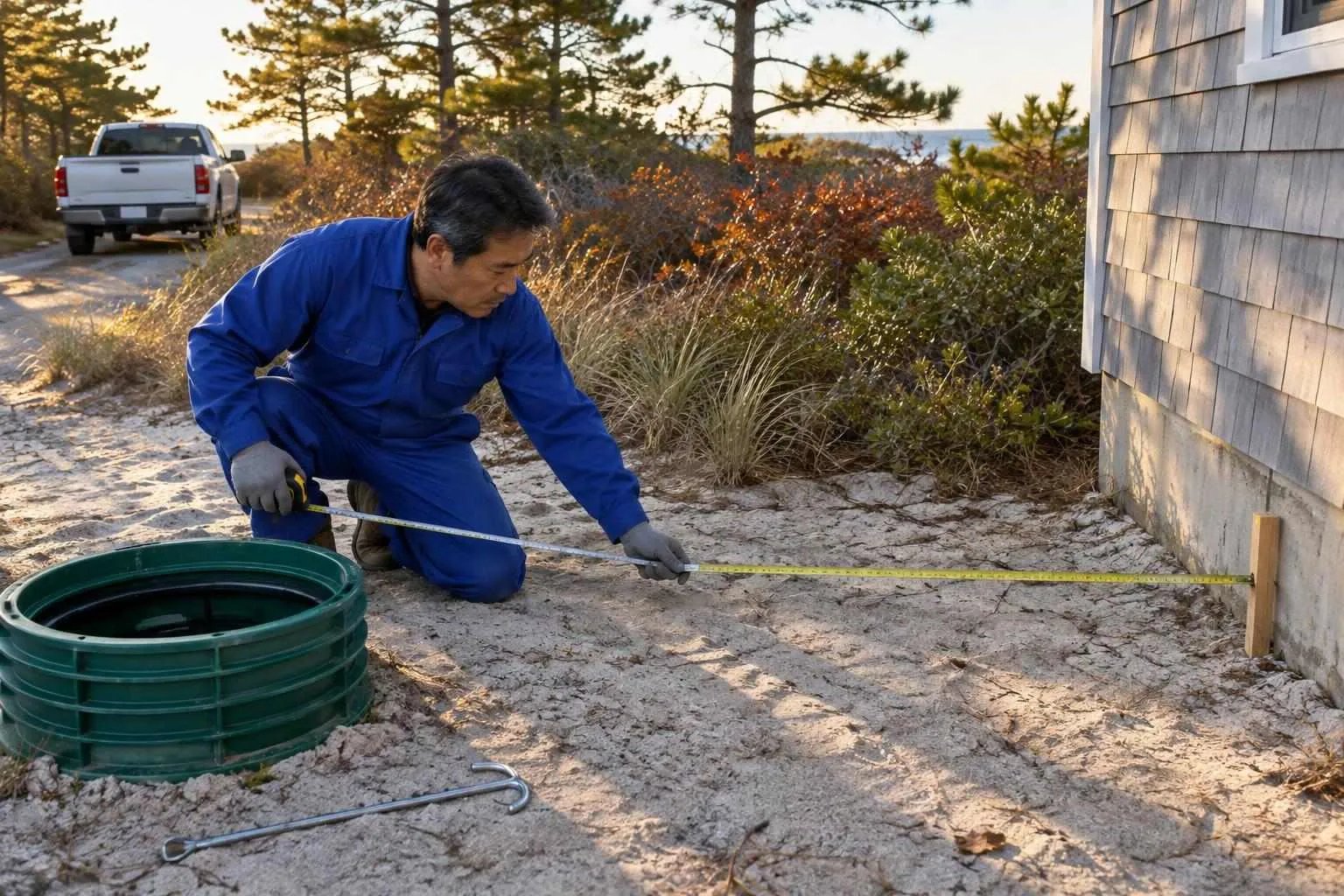
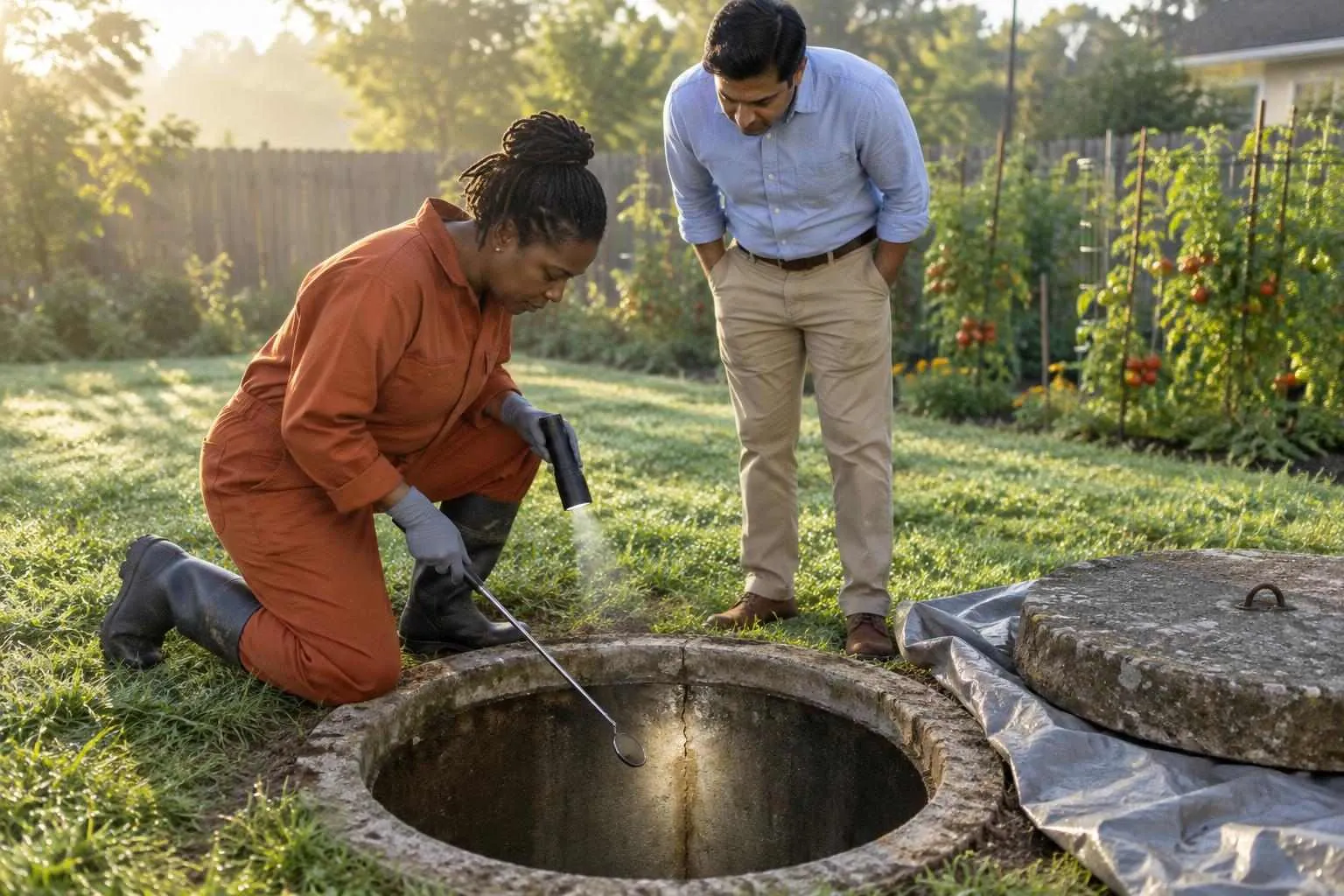
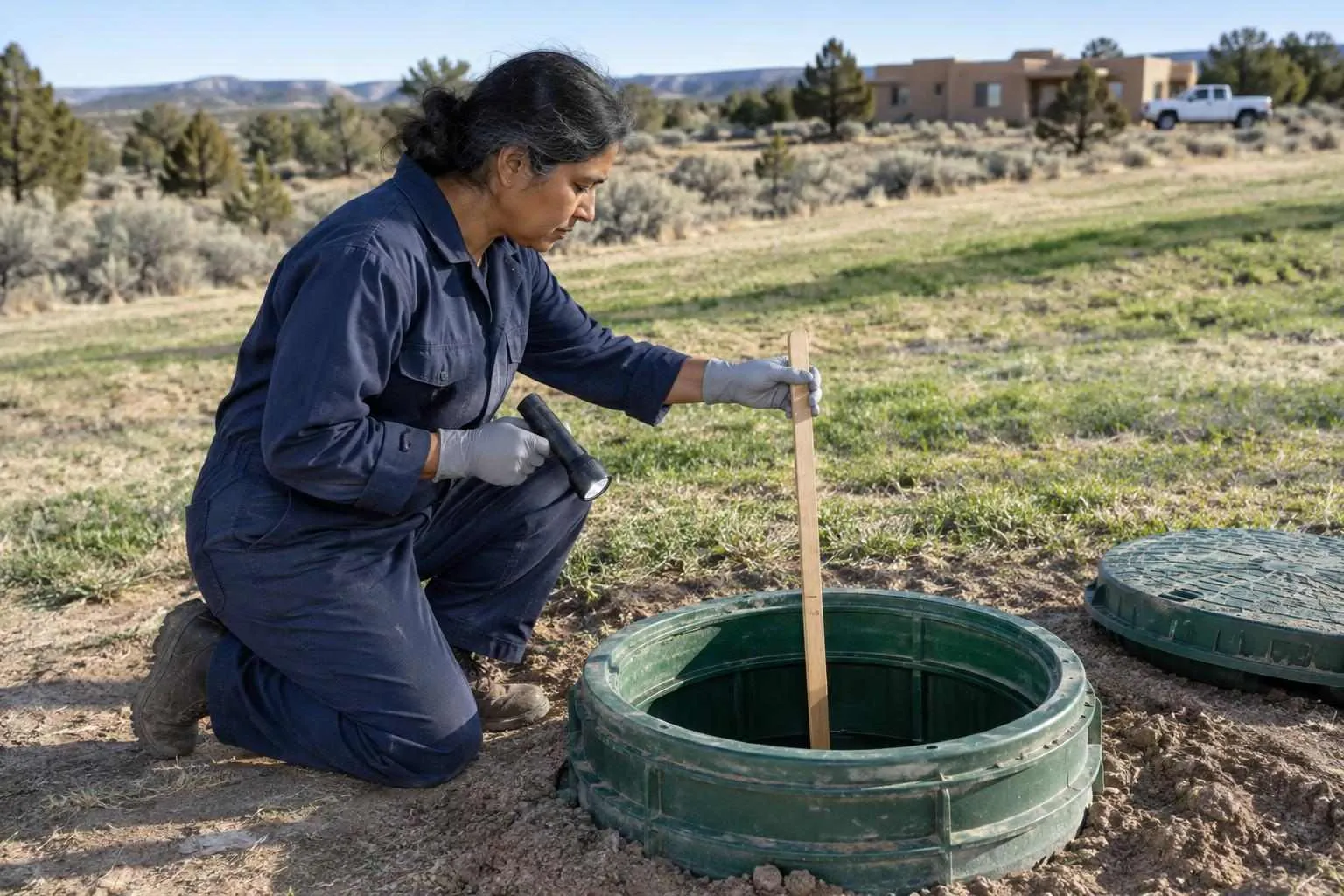
Your septic specialist — a certified inspector with actual onsite wastewater credentials — opens the tank, measures sludge and scum layers, checks inlet and outlet baffles, tests the effluent screen, evaluates the distribution box for level flow, walks the drain field, and runs a flow test. That’s a 2–4 hour process.
You need both when you’re buying a home. You need only the septic specialist when you’re diagnosing a problem, satisfying a compliance requirement, or preparing for a sale.
Hiring only the home inspector and calling it a septic inspection is the single most common mistake buyers make — and it’s almost always the seller who benefits.
The Villain in This Story Is Vague Language
Real estate contracts say “septic inspection.” Mortgage lenders say “septic inspection.” Home inspection reports say “septic inspection.” None of them specify what that actually means.
The result: buyers think they got a full system evaluation. They got a guy running a faucet.
The fix is simpler than you’d expect. When you see “septic inspection” in any document, ask: Who is performing it? What credentials do they hold? Does it include opening the tank, measuring sludge, and evaluating the drain field? If the answers aren’t satisfying, hire a certified septic specialist separately.
Practical Bottom Line
If you’re buying a home: Hire a certified septic inspector — not your home inspector — for a full system inspection. Expect it to take 2–4 hours. Get the tank pumped at the same time so the inspector can evaluate the components with the tank empty. Check your county health department’s requirements before scheduling.
If you own a home: Annual or biennial visual checks are fine for monitoring. Every 3–5 years (or whenever you notice slow drains, odors, or wet spots), schedule a full inspection with pumping.
If you’re selling a home: Know what your county requires for transfer compliance. In some areas, an inspection by an unqualified inspector won’t satisfy health department rules — and you’ll be scrambling to fix it at closing.
The difference between a “septic tank inspection” and a “septic system inspection” isn’t semantic. It’s the difference between knowing your tank is intact and knowing whether your entire wastewater system will function for the next decade.
Want to understand what a septic system inspector actually does from start to finish? Read the Complete Guide to Septic System Inspectors for a full breakdown of credentials, process, and what to expect on inspection day.
Done reading? Get quotes from septic system inspectors near you.
Takes about a minute. Free, no obligation; providers reply to you directly.
Popular cities:
Nick built this directory to help homebuyers and homeowners find credentialed septic inspectors who provide unbiased evaluations — a conflict of interest he encountered firsthand when inspectors tied to pumping companies recommended costly repairs that an independent evaluator later deemed unnecessary.