

Office location not published
Service area: “Professional septic services for Phoenix, Arizona's West Valley”
Published service area ↗Compare curated septic system inspectors, check certifications, read reviews, and request quotes — all in one place.
Map shows providers with a known office location. All providers are listed below.
No providers match this filter.
Providers with an office in the Phoenix area, matched by the ZIP code of their published address.
Based outside the Phoenix area, with Phoenix named in the service area on their own website.
Office location not published
Service area: “Professional septic services for Phoenix, Arizona's West Valley”
Published service area ↗Office location not published
Service area: “Westwood Septic Service Phoenix Metro Area, AZ”
Published service area ↗Offices in another part of the Phoenix, listed on their own local page.
Office in Mesa, AZ
Office in San Tan Valley, AZ · Office address not yet verified
Office in Apache Junction, AZ
Need help choosing? Get matched with top providers in seconds.
0 providers selected
Are you a septic system inspector in Phoenix? Already listed here: Arizona Septic Tank, Black Mountain Septic Services, Cave Creek Septic Service and 4 more.
List your businessView curated providers, check certifications, and read real client reviews.
Select up to 5 providers and send your project details. Free, no obligation.
Compare quotes, check availability, and book directly with the provider.
Finding a qualified septic system inspector in Phoenix shouldn’t feel like defusing a bomb, but between the sprawling metro, the patchwork of county and municipal jurisdictions, and the sheer number of unlicensed operators who’ll hand you a worthless report for $150, it often does. This directory exists to cut through that noise — every inspector listed here has been vetted for credentials, coverage area, and real experience with Maricopa County’s specific soil conditions and regulatory requirements.
Pro Tip: Request a sample report before booking. A quality inspector delivers a written report with photos, tank measurements, drainfield probe results, and a clear repair/replacement timeline. If their sample report is two paragraphs and no photos, keep looking.
A standard septic inspection in Phoenix runs $300–700, with most real estate inspections landing in the $350–500 range when pumping is included — and pumping should always be included for a pre-purchase inspection. The process takes 2–4 hours on-site: locating and uncovering the tank, pumping, baffle inspection, dye testing if the drainfield is accessible, and distribution box evaluation if the system has one. Written reports typically follow within 24–48 hours.
Reality Check: The $150 “septic inspection” you’ll see advertised around the Valley almost never includes pumping. Without pumping, the inspector cannot physically assess baffle condition or see inside the tank — which is where the expensive problems hide. A cheap inspection that misses a failing inlet baffle costs you a $4,000–8,000 repair after closing. Pay for the real inspection.
Phoenix’s rapid suburban expansion means a significant number of homes in outer Maricopa County — particularly in unincorporated areas around Buckeye, Laveen, and the far East Valley — were built on septic systems that have never been formally inspected or have aged well past their design life. ADEQ has been progressively tightening oversight of onsite systems, and Maricopa County Environmental Services requires a licensed inspection report for any property transfer involving a septic system — making a qualified inspector not just a smart hire, but a legal requirement before you can close.
Septic System Inspector services in Phoenix typically run $300-700 per inspection, depending on scope, complexity, and turnaround requirements. Expedited work and specialized equipment add cost.
Look for NAWT CI — it's the credential that separates qualified septic system inspectors from the rest. Also verify insurance, check reviews, and confirm they can handle your project's specific requirements.
There are currently 7 septic system inspectors listed in Phoenix, AZ on SepticTrust.
Sponsored providers pay for more prominent placement on pages where they already qualify to appear. Payment does not change a provider's location, credentials or reviews, and it is not an endorsement. All providers on SepticTrust — sponsored or not — are real businesses.
A real septic system inspector opens the tank, measures sludge, and tests flow for 2–4 hours — not a 10-minute eyeball. Know what to demand before closing.
A buried tank lid and missing records delayed one seller's closing by 3 weeks. Run through this checklist before your septic system inspector arrives.
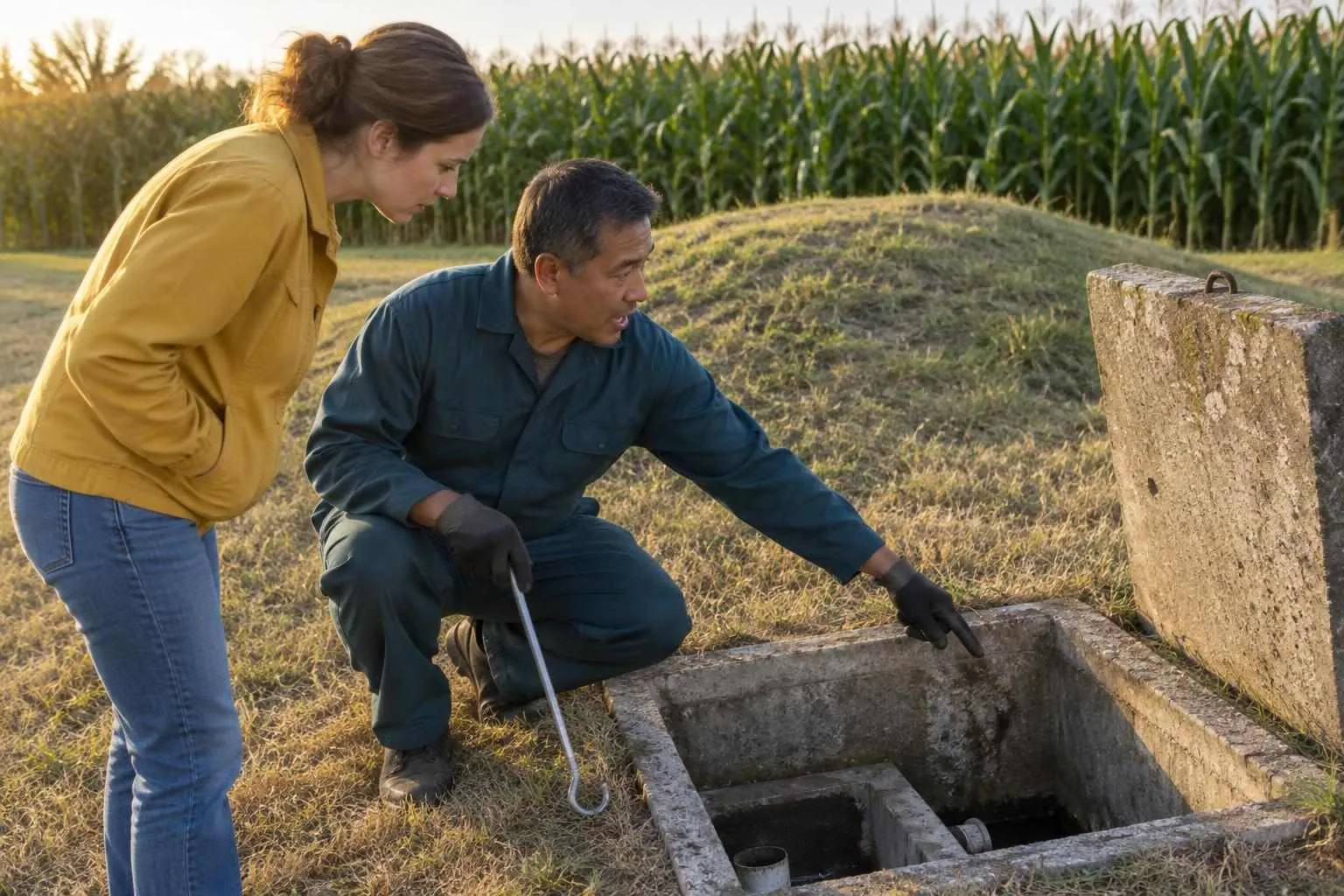
Hiring the wrong septic system inspector cost one homeowner $18,000. Get the 4 questions that expose unqualified operators before you sign.
Looking for more? Browse our full resource library or find septic system inspectors in other cities.