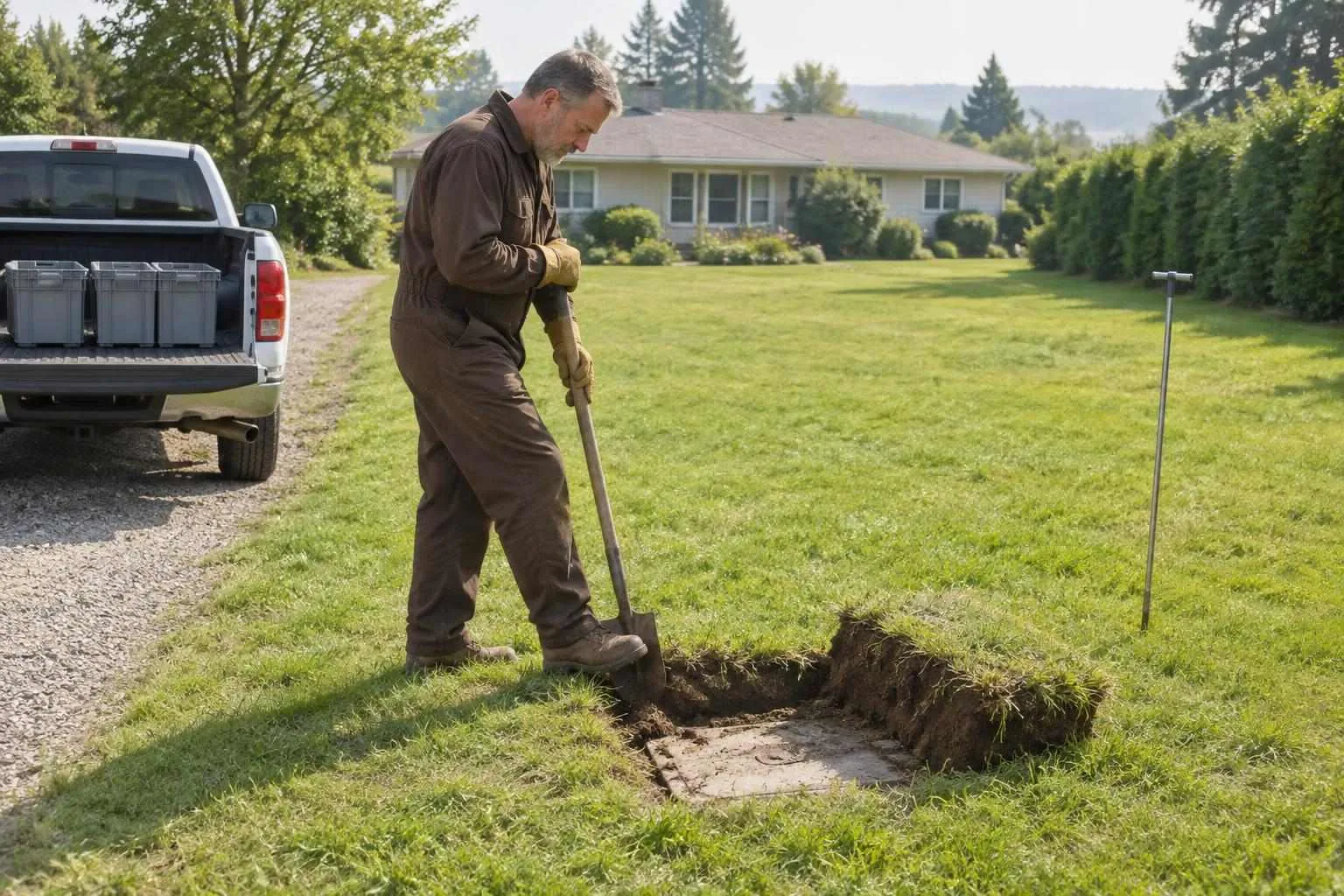
Are you a septic system inspector?
SepticTrust lists 346 septic system inspectors. A free listing gives you a profile page and quote requests from people looking for septic inspection near you, sent straight to your inbox.
A inspector I know — fifteen years in the field, hundreds of inspections a year — spent last fall re-entering handwritten notes into a spreadsheet every single evening. Not because he liked it. Because that’s how it had always been done. Meanwhile, the firm two counties over signed three new real estate agency contracts by offering same-day digital reports with GPS-stamped photos. Same physical inspection. Completely different business outcome.
That gap — between firms running 2015 workflows and firms running 2026 workflows — is wider than it has ever been, and it’s compounding fast.
The Short Version:The septic inspection industry is being reshaped by mobile-first reporting, AI-driven service intervals, and IoT sensors. Firms that adopt digital documentation and predictive maintenance workflows are capturing disproportionate inspection revenue. The technology is here now — the question is whether your business is using it.
Key Takeaways
- Mobile inspection completion (submitting reports from the field before leaving the site) is the single highest-correlated behavior with inspection revenue growth among service firms in 2026.
- The adjacent sewer and plumbing services market is growing at a 4.7% CAGR, from $404 million in 2026 to $530 million by 2034 — rising infrastructure investment is pulling septic inspection volume upward with it.
- AI interval optimization is replacing population-average pumping schedules, cutting emergency calls while increasing billable service frequency per account.
- Virginia’s 2026 General Assembly bill is redefining inspection documentation standards — and other states are watching.
The Paper Problem Nobody Wants to Talk About
Here’s what most people miss about the inspection business: the field work was never the bottleneck. The bottleneck is everything that happens after you climb out of the truck.
Paper inspection forms mean someone — usually the inspector, usually at night — has to transcribe field notes into a reportable format. Those reports then need to meet lender requirements, which increasingly means NAWT-standard formats. That process introduces errors, delays, and friction with the real estate agents who are the industry’s most reliable referral sources. One missed field on a lender checklist can hold up a closing.
Mobile-first platforms solve this by inverting the workflow entirely. The report gets completed in the field, on a phone or tablet, before the inspector drives away. Photos are GPS-stamped and auto-attached. The client and agent receive the report within minutes. The back-office transcription step simply disappears.
Reality Check:Switching from paper to mobile isn’t just an efficiency play — it’s increasingly a competitive requirement. Real estate transaction timelines have compressed. Agents who’ve worked with same-day digital reports won’t go back to waiting 48 hours for a PDF.
What the Market Data Actually Says
The septic inspection segment is growing, but the data paints a more nuanced picture than “everything is up.”
The broader sewer and plumbing services market — the closest comparable with hard numbers — is projected to grow from $404 million in 2026 to $530 million by 2034 at a 4.7% CAGR. The primary drivers: aging infrastructure requiring more frequent inspection cycles, urbanization pushing development into areas where municipal sewer isn’t viable, and sensor-based predictive maintenance creating new recurring service categories.
That last point matters for inspectors specifically. Predictive maintenance — IoT sensors monitoring tank levels, effluent quality, and flow rates in real time — doesn’t replace inspections. It generates inspection triggers. A sensor alert that something is off still requires a credentialed inspector to evaluate, document, and recommend. The market for inspection services expands alongside sensor adoption, not in competition with it.
| Technology | What It Replaces | What It Adds |
|---|---|---|
| Mobile reporting platforms | Paper forms + back-office data entry | Same-day reports, NAWT-ready format, audit trail |
| IoT sensors | Scheduled pumping on population averages | Real-time alerts, usage-based service intervals |
| Remote cameras / sonar | Manual visual inspection of inaccessible areas | Documentation of hard-to-see conditions, defensible records |
| AI interval optimization | Fixed 3-year pumping cycles | Account-specific schedules based on actual usage data |
| Trenchless repair tech | Excavation for drainfield repair | Faster, less disruptive remediation post-inspection |
AI Interval Optimization: The Concept That Changes Unit Economics
This one deserves more airtime than it gets. Traditional septic service runs on population averages — pump every three years, inspect every five. The problem is that household usage varies enormously: a two-person retirement home generates a fraction of the wastewater load of a six-person family with a garbage disposal.
AI interval optimization uses account-level data — tank size, household occupancy, historical service records, sensor readings where available — to calculate the right service interval per property. The result: higher-utilization accounts get serviced more frequently (more revenue), lower-utilization accounts don’t get unnecessarily early service calls (better customer retention), and emergency pump-outs decline across the board.
Pro Tip:If you’re evaluating septic management software in 2026, “AI interval optimization” is the feature to ask about specifically. Platforms that offer it report measurably fewer after-hours emergency calls — which directly affects your profit margins and your technicians’ quality of life.
Regulatory Pressure Is Accelerating the Shift
Virginia’s 2026 General Assembly bill is worth watching even if you don’t operate there. It proposes changes to how septic inspections are defined and documented — specifically pushing toward digital, standardized formats that align with state database submission requirements.
The pattern is familiar: one state codifies a best practice, lenders in that state start requiring it, national lenders adopt it across all states, and within a few years it’s the de facto standard everywhere. NAWT certification went through exactly this cycle.
The implication for inspectors: the firms building digital documentation workflows now aren’t just chasing efficiency. They’re positioning for regulatory requirements that are coming regardless.
Performance-based wastewater management evaluation — assessing systems on actual treatment effectiveness and nutrient limits rather than just visual pass/fail — is also gaining traction with environmental regulators. This framework requires ongoing inspection and monitoring, not just transaction-triggered checks. For inspectors, that means recurring contract opportunities with property managers and municipalities, not just one-time real estate referrals.
The Competency Shift Nobody Warned Inspectors About
There’s an uncomfortable truth in the industry right now: the job description is changing faster than the training pipeline.
Interpreting a sensor readout requires different skills than reading a baffle’s physical condition. Understanding effluent quality data requires familiarity with treatment standards that weren’t part of traditional inspector training. Organizations like Onsite Wastewater Professionals are aligning their education programs with this reality — but the gap between what IoT-equipped systems produce and what the average inspector can confidently interpret remains significant.
This isn’t a criticism. It’s a market opportunity. Inspectors who invest in sensor and controls training in 2026 are positioning themselves as the qualified professional in a room full of generalists when a property manager needs someone to explain why their aerobic treatment unit is throwing alerts.
You can read more about what the full inspector engagement looks like in our Complete Guide to Septic System Inspectors.
Practical Bottom Line
The septic inspection industry in 2026 has a clear fault line: firms running digital workflows and firms that aren’t. The gap is visible in response times, report quality, referral volume, and the ability to compete for recurring maintenance contracts alongside transactional real estate work.
Three things worth acting on now:
-
Audit your reporting workflow. If any part of your process involves transcribing field notes after the fact, you have a competitive vulnerability. Mobile-first platforms with NAWT-format output are available at price points that make the switch straightforward.
-
Get educated on sensors. You don’t need to install IoT systems yourself. You need to be able to read the data they produce and translate it into a defensible inspection recommendation. That’s a CE course, not a career change.
-
Watch Virginia. If that bill passes in its current form, you’ll have 12-18 months before similar language shows up in your state’s regulatory cycle. Use the lead time.
The inspectors who thrive in the next five years aren’t necessarily the ones with the most field experience. They’re the ones who understood that the industry shifted — and moved before they had to.
Done reading? Get quotes from septic system inspectors near you.
Takes about a minute. Free, no obligation; providers reply to you directly.
Popular cities:
Nick built this directory to help homebuyers and homeowners find credentialed septic inspectors who provide unbiased evaluations — a conflict of interest he encountered firsthand when inspectors tied to pumping companies recommended costly repairs that an independent evaluator later deemed unnecessary.