

Office location not published
Service area: “Contact Chavis Septic Services to set up septic inspections in Harford County, Baltimore County, Carroll County or Cecil County, MD”
Published service area ↗Compare curated septic system inspectors, check certifications, read reviews, and request quotes — all in one place.
Map shows providers with a known office location. All providers are listed below.
No providers match this filter.
Providers with an office in the Baltimore area, matched by the ZIP code of their published address.
Based outside the Baltimore area, with Baltimore named in the service area on their own website.
Office location not published
Service area: “Contact Chavis Septic Services to set up septic inspections in Harford County, Baltimore County, Carroll County or Cecil County, MD”
Published service area ↗Also in Maryland: Frederick area (1), Southern Maryland area (1), Western Maryland area (1)
Need help choosing? Get matched with top providers in seconds.
0 providers selected
Are you a septic system inspector in Baltimore? Already listed here: Blevins & Sons Septic Service, Chavis Septic Services, Eagle & Son Septic Service and 2 more.
List your businessView curated providers, check certifications, and read real client reviews.
Select up to 5 providers and send your project details. Free, no obligation.
Compare quotes, check availability, and book directly with the provider.
Finding a qualified septic system inspector in Baltimore shouldn’t feel like a gamble, but the market is full of handymen with a flashlight calling themselves inspectors. This directory exists to cut through that noise — every listing here is a credentialed professional who can actually tell you whether that drainfield is two years from catastrophic failure or just needs a pump.
Pro Tip: Baltimore City properties are almost entirely on public sewer — septic systems are concentrated in Baltimore County, Harford County, and the rural corridors stretching toward the Eastern Shore. If you’re buying in Parkville, Owings Mills, or anywhere west of I-695, there’s a real chance the property has a septic system even if the listing doesn’t flag it. Always confirm with the county health department before assuming.
A thorough septic inspection in the Baltimore metro runs $300–700 depending on system size, tank accessibility, and whether dye testing or a full pump-and-inspect is included. Most certified inspectors can turn around a written report within 24–48 hours, which is tight enough to work inside a standard real estate contingency window.
Reality Check: The $150 “inspection special” you’ll see advertised on Craigslist almost never includes pumping. Without pumping, an inspector literally cannot see the bottom of the tank or assess baffle condition — they’re just guessing. Budget for a full service and treat the cost as cheap insurance against a five-figure surprise.
Baltimore County and its suburban ring sit on a patchwork of public sewer and private septic that dates back decades, and Maryland’s 2012 Watershed Implementation Plan has progressively tightened nutrient management rules around the Chesapeake Bay watershed — meaning older conventional systems are increasingly flagged for upgrade to enhanced nitrogen-removal (ENR) technology during property transfers. If you’re buying a property in the Critical Area (within 1,000 feet of tidal water) or in a Tier II growth area, your inspector should be fluent in Maryland’s Bay Restoration Fund requirements and what a mandatory ENR upgrade would cost you before you sign anything.
Septic System Inspector services in Baltimore typically run $300-700 per inspection, depending on scope, complexity, and turnaround requirements. Expedited work and specialized equipment add cost.
Look for NAWT CI — it's the credential that separates qualified septic system inspectors from the rest. Also verify insurance, check reviews, and confirm they can handle your project's specific requirements.
There are currently 5 septic system inspectors listed in Baltimore, MD on SepticTrust.
Sponsored providers pay for more prominent placement on pages where they already qualify to appear. Payment does not change a provider's location, credentials or reviews, and it is not an endorsement. All providers on SepticTrust — sponsored or not — are real businesses.
A real septic system inspector opens the tank, measures sludge, and tests flow for 2–4 hours — not a 10-minute eyeball. Know what to demand before closing.
9 common septic system inspector mistakes that cost homeowners thousands — from skipping drain field checks to hiring on price. Know what a real inspection…
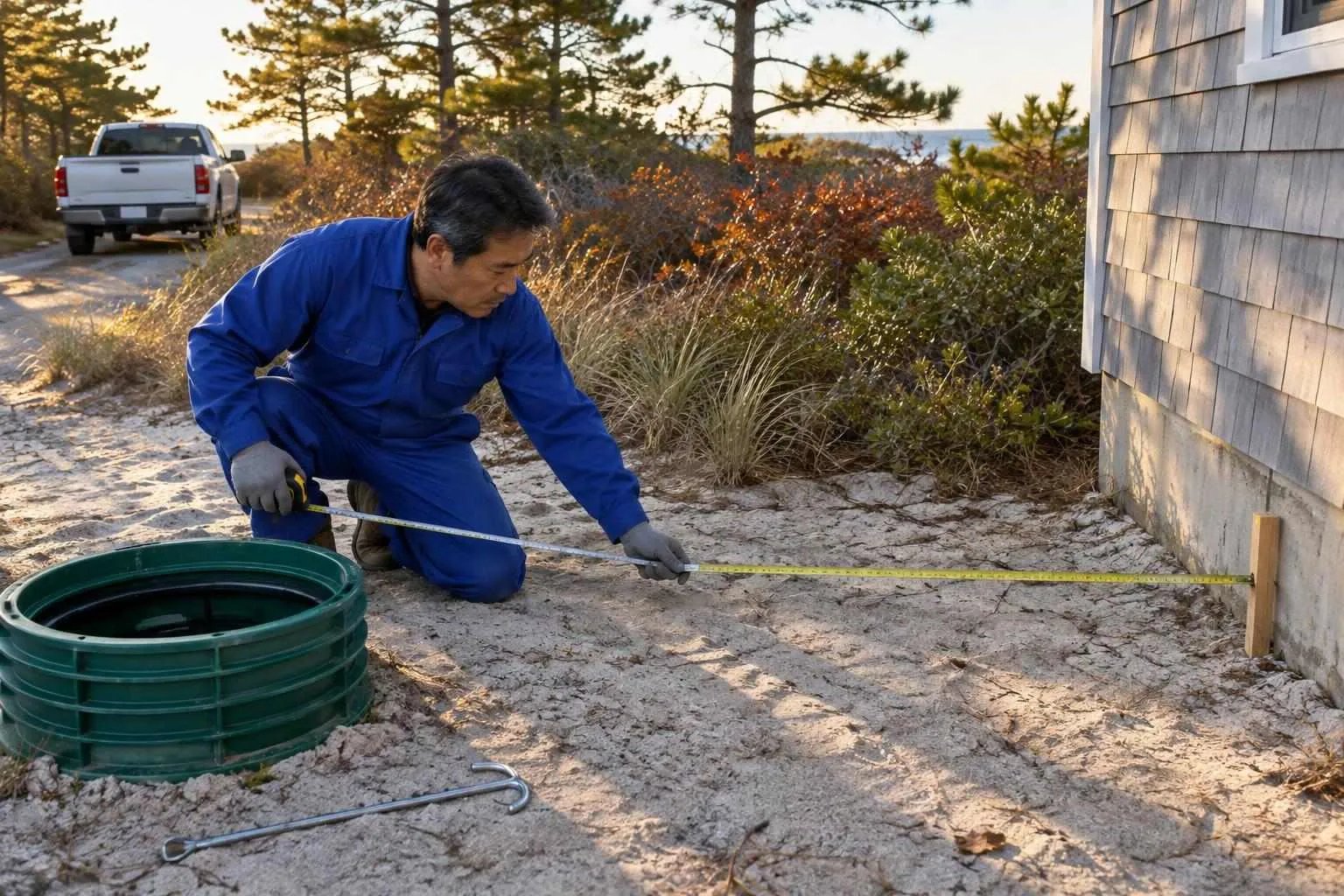
Septic system inspector costs range from $48 to $900+ depending on your state's rules, not skill. See the full state-by-state breakdown.
Looking for more? Browse our full resource library or find septic system inspectors in other cities.